Regulatory Milestones
We are modernizing the advanced reactor licensing process to enable the safe and repeatable deployment of our SMR technology. By securing foundational approvals early, we significantly de-risk our future projects and establish a clear path to energy security.

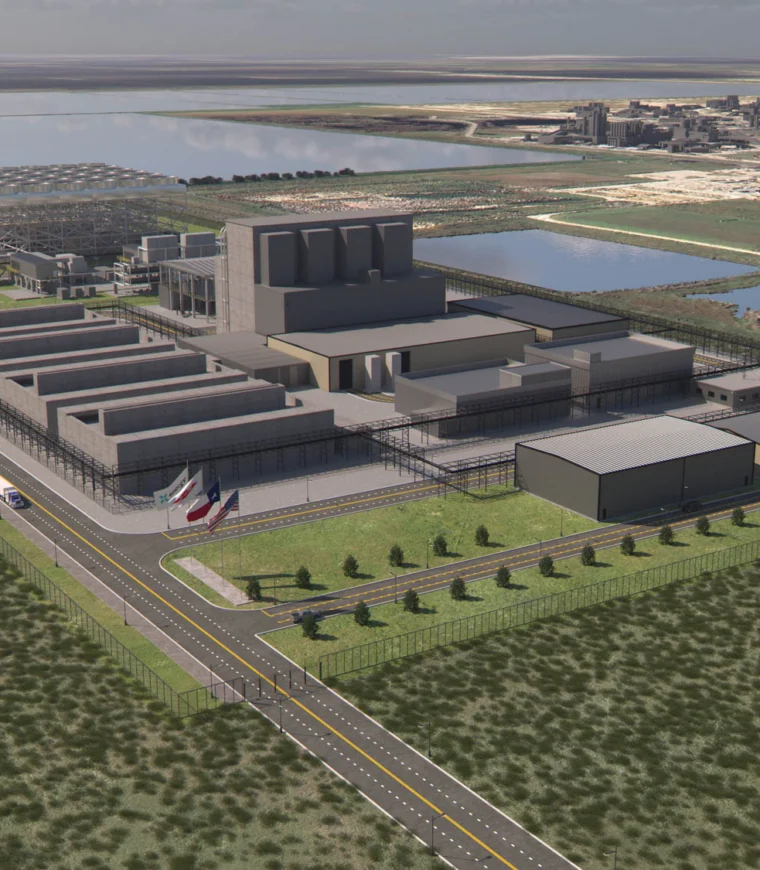
Long Mott Generating Station
10 CFR Part 50
Four-unit XE-100 plant designed to deliver up to 320 MWe of electricity, or 800MW of industrial-grade heat.
steps
- Pre-Application
- CPA Submission
- Acceptance and Docketing
- Draft Safety Report
- Advanced Safety Report
- Environmental Assessment
- Final Safety Evaluation Report
- Construction Permit Issuance
Frequently Asked Questions
X-energy and Dow submitted a Construction Permit Application to the U.S. Nuclear Regulatory Commission in March 2025 for Long Mott Generating Station—a proposed four-unit Xe-100 plant at Dow’s Seadrift, Texas facility. The NRC completed its Environmental Review in May 2026, and the safety review continues on its established 18-month timeline.
10 CFR Part 50 is the U.S. Nuclear Regulatory Commission’s established licensing framework for commercial nuclear power plants. It is a well-understood two-step approach consisting of a Construction Permit issued after safety and environmental review, and an Operating License issued after construction completion and final safety inspection.
Part 50 has been used successfully for over 50 years to license more than 100 reactors in the United States. While originally developed for light-water reactors, we believe this approach will likely be cumulatively faster than Part 52 options due to a more flexible change control process during the construction period. The Part 50 pathway also allows X-energy to reference its numerous NRC-approved topical reports – covering fuel qualification, safety analysis, source term methodology, and other foundational safety matters – as regulatory assets that subsequent Xe-100 projects can cite without re-justifying the underlying technical analysis.
The NRC’s 18-month Construction Permit review timeline for Long Mott, announced June 2025, represents one of the most efficient advanced reactor review schedules announced to date. The NRC cited the completeness and quality of X-energy’s and Dow’s application, and the volume of pre-application work conducted as key considerations in determining the review schedule.
As part of its pre-application engagement, X-energy submitted more than 30 technical documents, and secured safety evaluations on 14 topical reports before submitting a Construction Permit Application in March 2025. This front-loaded technical work helps to resolve complex safety questions early, allowing the NRC to conduct focused reviews of site-specific factors rather than fundamental design questions.
Construction Permit approval authorizes X-energy and Dow to begin site preparation, below-grade concrete work, and installation of safety-related structures, systems, and components. While the plant is under construction, an Operating License Application is submitted to the NRC requesting authorization to operate the plant. This application includes final as-built design documentation, operational procedures, emergency planning implementation, and operator training programs.
Throughout construction, NRC inspectors verify quality assurance compliance and adherence to approved designs. The Operating License is issued only after NRC confirms all construction requirements are met and operational readiness is demonstrated.
Yes. Long Mott’s regulatory achievements serve as referenceable regulatory assets for all future Xe-100 projects, with the potential to significantly accelerate subsequent licensing timelines. Specifically:
- NRC-Approved Methodologies: Topical reports with Safety Evaluations apply to the Xe-100 design generically, not just Long Mott. Future projects can cite these approved methodologies without re-demonstrating the underlying technical bases, helping reduce review scope to site-specific factors.
- Design Standardization: Once Long Mott’s Construction Permit is issued, the approved reactor design becomes a “reference plant” that future applications can leverage. Subsequent site-specific reviews are then able to focus on local factors rather than fundamental reactor safety questions.
- Regulatory Precedent: Long Mott is the first advanced high temperature gas reactor Construction Permit Application under Part 50 in over 7 years. The NRC’s review process for Long Mott helps establish precedents that inform how subsequent Xe-100 applications are evaluated, reviewed, and approved.
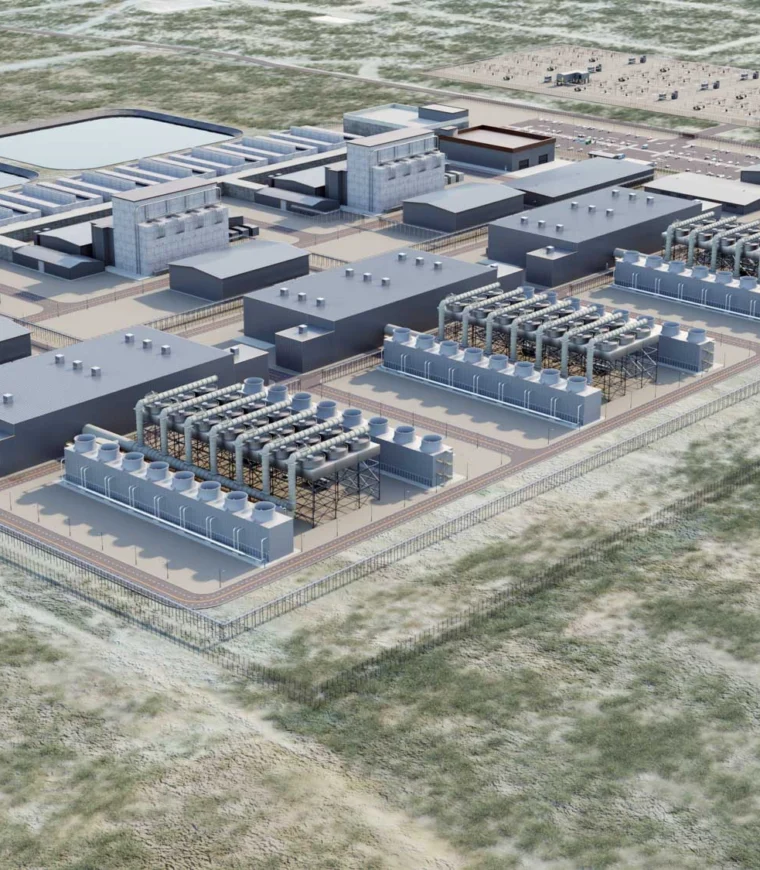
Cascade Advanced Energy Facility
10 CFR Part 50
Up to twelve Xe-100 reactors co-located with Energy Northwest’s Columbia Generating Station in Richland, Washington.
steps
- Regulatory Engagement Plan
- Site Characterization
- Acceptability of Historical Information
- CPA Submission
Frequently Asked Questions
X-energy and Energy Northwest are currently in pre-application engagement with the NRC for the Cascade Advanced Energy Facility, expected to benefit from regulatory precedents established through Long Mott’s Construction Permit review as well as Columbia Generating Station’s 40+ years of operational history at the site.
While both projects are progressing under Part 50, the Cascade Advanced Energy Facility’s licensing process has significant potential for increased efficiency – benefiting both from the regulatory precedents established through Long Mott’s Construction Permit Application review, and co-location with Energy Northwest’s Columbia Generating Station, a boiling water reactor (BWR) licensed until 2043.
Co-location allows Cascade to operate within Columbia’s existing 10-mile emergency planning zone, leverage shared security and emergency response infrastructure, and interconnect with existing transmission assets. Columbia Generating Station’s 40+ years of operational history also provides extensive qualitative site-specific data that can be leveraged as part of the application. These and other co-location factors create opportunities for increased efficiency in the licensing process, further supported by regulatory precedent established during Long Mott’s CPA review.
To ensure safe and reliable operations when co-locating a new nuclear facility, the NRC conducts site-specific reviews of potential interactions between the two facilities. Broadly, the NRC evaluates whether a new nuclear facility can safely share emergency planning zones, security infrastructure, and emergency response resources with an existing facility, or whether independent systems are required. As an example, the Xe-100’s 400-meter emergency planning zone allows Cascade to operate entirely within Columbia’s existing 10-mile EPZ boundary, simplifying emergency planning coordination and reducing regulatory complexity.
Additional NRC evaluation areas include seismic and external event interactions between facilities, spent fuel storage, electrical grid isolation to prevent cross-facility service disruptions, and workforce qualification requirements. Energy Northwest’s 40+ years of nuclear operating experience at Columbia provides extensive site characterization data and operational expertise that inform Cascade’s design and licensing approach.
Yes. NRC regulations under 10 CFR Part 50 allow a single Construction Permit Application to cover multiple identical or similar reactor units at one site, provided the application demonstrates adequate safety analysis for all units and site capacity to support full build-out. This approach has been used successfully throughout the U.S. nuclear fleet, with most large nuclear plants licensed as multi-unit sites in a single proceeding.
Cascade is planned as a 4 – 12-unit deployment with phased construction. Multi-unit approval enables a single environmental assessment covering full site build-out, and common safety analysis for identical reactor designs. Even with multi-unit approval, each reactor undergoes independent NRC construction inspections and receives an operating license only after demonstrating individual unit readiness.
U.K. Office of Nuclear Regulation
Generic Design Assessment
Generic Design Assessment enables design approval independent of site selection, with subsequent site-specific licensing.
steps
- DESNZ Eligibility
- Cost Recovery Agreement
- Early Engagement
- Generic Design Assessment

Frequently Asked Questions
X-energy is advancing U.K. Xe-100 deployment through a Generic Design Assessment (GDA), a two-phase regulatory process that separates reactor design approval from site-specific licensing. In June 2026, X-energy submitted an application to enter Generic Design Assessment with the U.K. Office of Nuclear Regulation. The assessment, which will be administered by ONR, the Environment Agency, Natural Resources Wales, and the Department for Energy Security and Net Zero, is expected to conclude by the end of 2029.
Generic Design Assessment (GDA) is a significant step in the United Kingdom’s reactor design approval process, administered by the Office for Nuclear Regulation (ONR). Unlike U.S. NRC licensing under 10 CFR Part 50 which combines design review and site-specific licensing in one proceeding, the U.K. separates design approval from site licensing into two sequential phases:
- Generic Design Assessment: ONR evaluates reactor design, safety systems, fuel performance, and operational procedures without reference to any specific site. If approved, ONR issues a Design Acceptance Confirmation (DAC) and Statement of Design Acceptability (SDA) valid for any U.K. site meeting specified parameters.
- Site-Specific Licensing: After GDA approval, the reactor vendor and site developer apply for site-specific licenses from ONR. ONR evaluates site suitability, local site characteristics, emergency planning, and environmental factors
Yes. Generic Design Assessment approval is design-specific, not site-specific. Once ONR issues a Design Acceptance Confirmation (DAC) and a Statement of Design Acceptability (SDA) for the Xe-100, that approval applies to any U.K. project that meets the generic design parameters without requiring repeated design reviews for each site. This standardized approach helps to enable fleet-scale deployment, much like the NRC’s licensing process under Part 52.
After GDA completion, each site requires only site-specific licensing evaluating local seismicity, emergency planning zones, grid interconnection, and environmental impacts. All U.K. Xe-100 plants would reference the same approved GDA safety documentation, helping to ensure consistent safety standards while reducing per-site regulatory burden.
The U.S. and the U.K. signed the U.S.-U.K. Civil Nuclear Energy Agreement (renewed 2024) and a Memorandum of Understanding (2025) to foster technical cooperation between the NRC and ONR. The agreements allow regulatory information sharing, joint technical reviews, and mutual recognition of certain safety analyses, helping to reduce duplication and increase the overall efficiency of Xe-100 licensing. X-energy’s NRC-approved topical reports can be shared with ONR, allowing U.K. regulators to leverage NRC’s technical findings rather than conducting entirely independent reviews from scratch.
The agreement also facilitates the export of U.S. reactor and fuel technology and TRISO fuel from TX-1 in Oak Ridge, Tennessee to U.K. sites under streamlined procedures. As Long Mott progresses through NRC Construction Permit review, regulatory precedents and safety analysis approaches can inform ONR’s GDA evaluation, potentially reducing Hartlepool’s total licensing timeline compared to entirely independent reviews.

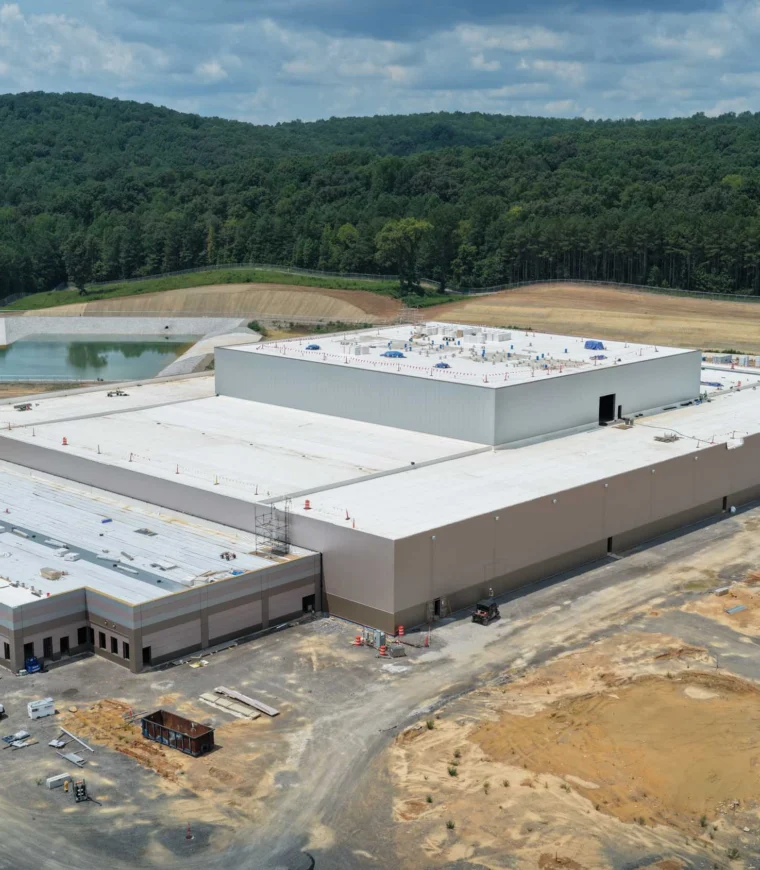
TX-1 + TX-2
10 CFR Part 70
The first new fuel facilities licensed by the NRC in over 50 years, and the first-ever Category II fuel fabrication license.
stages
- Part 70 License Approval
- Construction
- Final Safety Inspection
Frequently Asked Questions
In February 2026, TRISO-X received the first Part 70 HALEU fuel fabrication licenses issued by the NRC—authorizing TX-1 and TX-2 as the first Category II fuel fabrication facilities in the United States. TX-1 is currently under construction in Oak Ridge, Tennessee, with operations expected to commence following facility completion and final NRC startup inspections.
10 CFR Part 70 is the NRC’s licensing framework for facilities that handle special nuclear material (SNM) including uranium enrichment, fuel fabrication, and fuel reprocessing. It is not a license to build or operate a reactor. TX-1 and TX-2 are licensed under Part 70 as Category II fuel fabrication facilities, authorized to manufacture TRISO fuel pebbles using high-assay low-enriched uranium (HALEU).
A Part 70 Special Nuclear Material License is the federal regulatory authorization to commercially manufacture nuclear fuel using low-enriched uranium. In TRISO-X’s case, the license authorizes production using high-assay low-enriched uranium (HALEU). The license confirms TRISO-X is expected to be able to safely produce fuel at commercial scale. It does not pertain to TRISO-X fuel performance itself. Fuel qualification is part of an individual reactor’s Operating License application under Part 50, 52, or 53.
Specifically, the license allows TRISO-X to:
- Receive and possess HALEU feedstock (enriched uranium up to approximately 20%)
- Process and fabricate TRISO fuel particles which are then fabricated into graphite TRISO fuel pebbles
- Store, handle, and transport finished fuel products
- Operate TX-1 (under construction) and TX-2 (in design) as commercial fuel factories
TX-1 and TX-2 are the first-ever facilities to receive a Part 70 license that is both Category II (enriched uranium up to approximately 20%) and for fuel fabrication. Previous Category II licenses have been granted to enrichment facilities, not fuel fabrication facilities. These are different steps of the nuclear fuel cycle. Other fuel fabricators who have received Part 70 licenses produce conventional fuel and work with low-enriched uranium below the Category II threshold.
No new large-scale fuel fabrication facilities have been licensed since the 1970s because the existing light-water reactor fuel supply chain had adequate capacity and advanced reactor designs like the Xe-100 use different fuel forms not manufactured by existing facilities. TX-1 establishes the first U.S. commercial-scale TRISO fuel production capability, helping to break dependence on foreign fuel sources and positioning the U.S. to reclaim leadership in advanced reactor fuel supply.
Yes. TRISO-X fuel pebbles can potentially supply any advanced reactor design that uses TRISO particle fuel in pebble-bed configurations, subject to compatibility with various specific reactor and fuel design specifications. TRISO-X’s Part 70 license authorizes possession of HALEU and manufacturing of TRISO fuel pebbles generically. It is not exclusive to TRISO-X fuel specific to any one reactor design.
The Blueprint for Commercial Scale
X-energy has conducted one of the most comprehensive pre-application engagements in the advanced nuclear industry. Since 2018, our licensing experts have submitted more than 30 technical documents to the U.S. Nuclear Regulatory Commission spanning every domain of the nuclear safety case — reactor physics, thermal-hydraulics, fuel qualification, source term analysis, emergency planning zone sizing, seismic design, and operator training. Our regulatory strategy is built on a simple premise: do the foundational work today to help ensure safe, scalable deployment tomorrow.